
- Home
- Hysteroscopy
Services
Hysteroscopy can reveal hidden reasons behind infertility and miscarriages — early diagnosis improves success.
Hysteroscopy
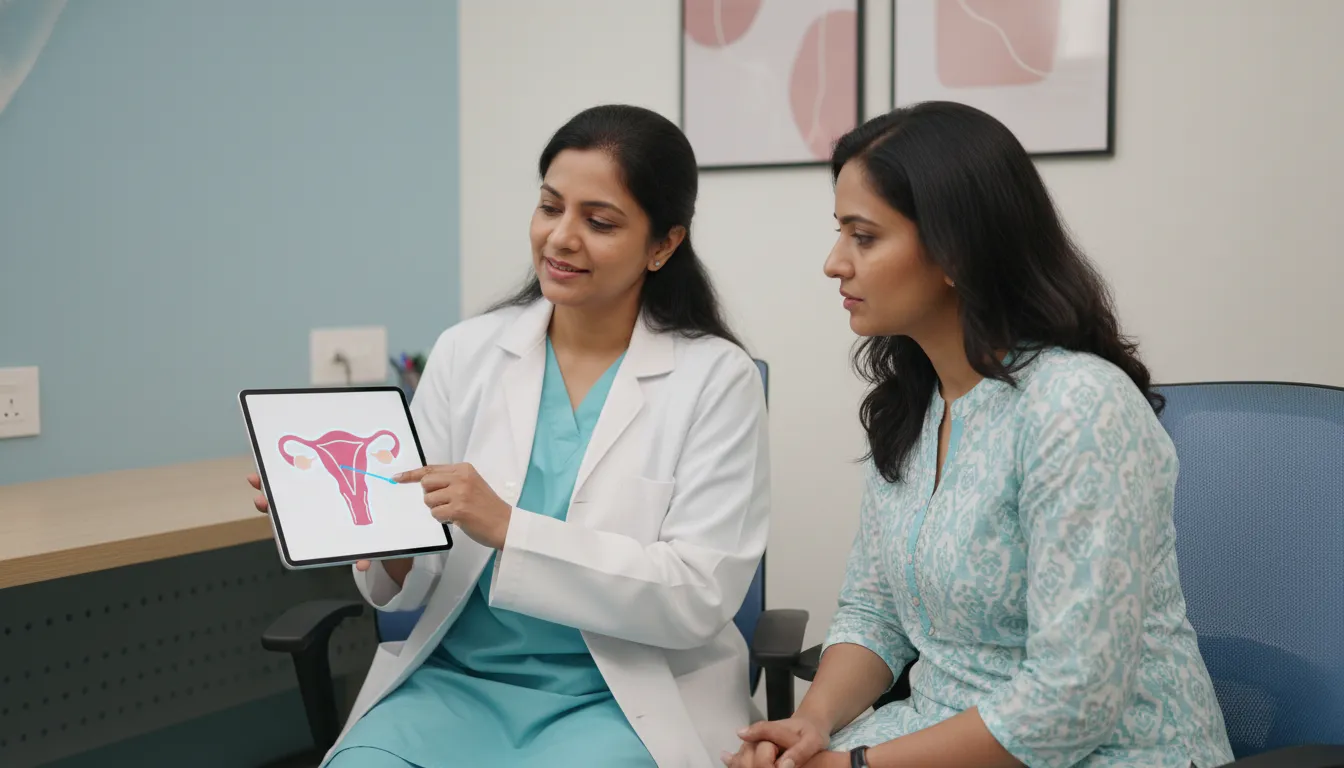
Uterine Fibroids | Polyps Removal | RPL Evaluation | No Cuts, Quick Recovery
Hysteroscopy is a minimally invasive procedure used to examine the inside of the uterus.
A thin camera (hysteroscope) is gently inserted through the cervix to check for problems such as polyps, fibroids, septum, adhesions, or any structural issues that may cause infertility or recurrent pregnancy loss (RPL).
What is Hysteroscopy?
Hysteroscopy involves inserting the hysteroscope through the vagina and cervix into the uterus. Because it uses the natural opening of the cervix, no surgical cuts (incisions) are needed on the abdomen.
Diagnostic Hysteroscopy: Used to simply look inside the uterus to find the cause of symptoms.
Operative Hysteroscopy: Used to perform minor surgeries, like removing fibroids or polyps, right after diagnosis.
When is Hysteroscopy Recommended?
This procedure is often recommended for women experiencing:
Recurrent Pregnancy Loss (RPL): To check for uterine abnormalities that lead to repeated miscarriages.
Infertility Evaluation: To ensure the uterine cavity is healthy for implantation.
Heavy or Abnormal Bleeding: To find the cause, such as polyps, fibroids, or thickened lining.
Removal of Growths: To surgically remove small fibroids (submucosal) or polyps.
Foreign Body Removal: To remove misplaced IUDs (Copper-T) or retained tissue.
Benefits of Hysteroscopy
No external cuts → no scars
Quick recovery (same-day discharge)
Accurate diagnosis inside the uterus
Can remove polyps/fibroids in the same sitting
Improves chances of pregnancy
Helps prevent repeated miscarriages
Less pain compared to traditional surgery
Hysteroscopy vs. Laparoscopy
Hysteroscopy: Looks inside the uterus (Uterine Cavity).
Laparoscopy: Looks outside the uterus and other pelvic organs (Ovaries, Tubes, Uterus surface).
(Often, the two procedures are done together for a complete pelvic check.)
When Should You Consult a Doctor?
Two or more miscarriages
Suspected fibroids/polyps
No pregnancy despite regular cycles
Abnormal periods or bleeding
Ultrasound showing uterine abnormalities