
- Home
- Hysteroscopic Surgery
Early treatment ensures better fertility outcomes and faster recovery.
Hysteroscopic Surgery in Jammikunta
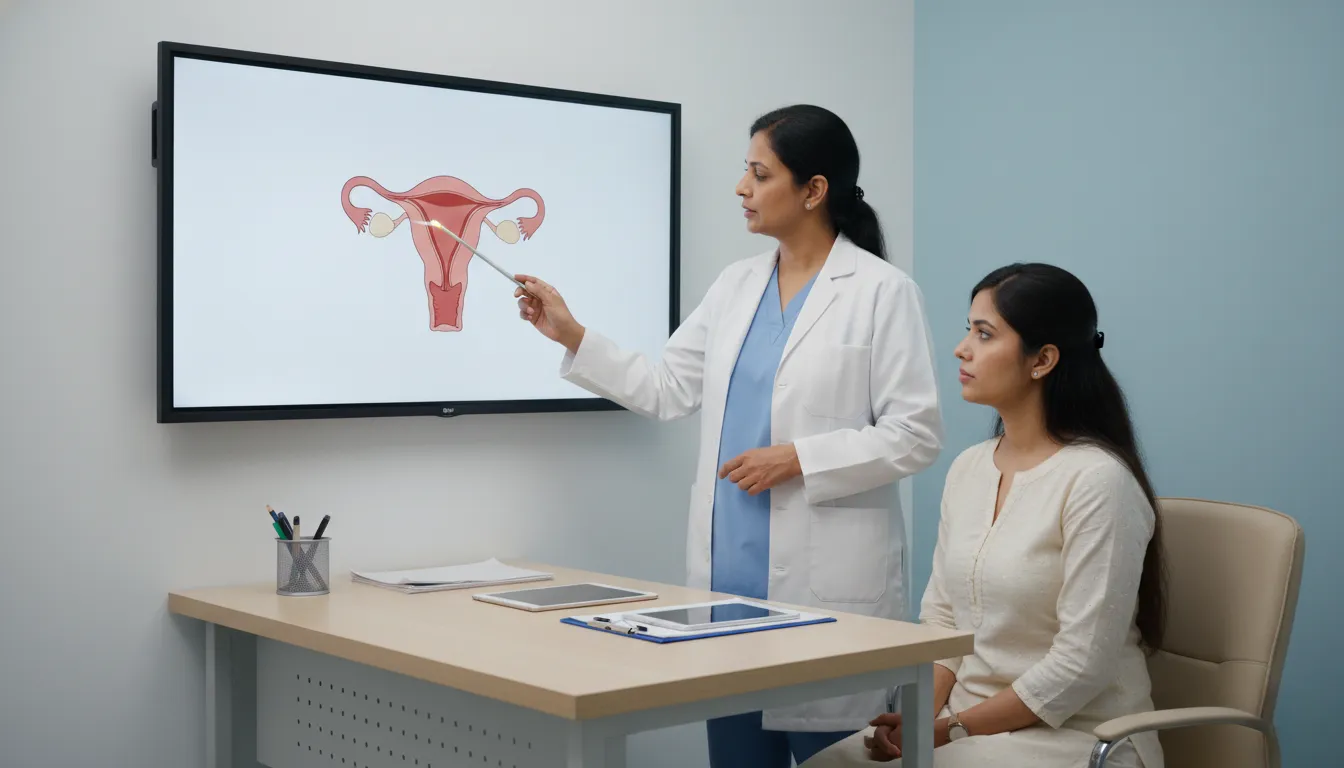
Uterine Polyps | Fibroids Removal | Septum Correction | RPL & Infertility Evaluation
Hysteroscopic Surgery is a minimally invasive procedure where a thin camera (hysteroscope) is inserted through the vagina and cervix to examine and treat problems inside the uterus — without making any cuts on the abdomen.
It is one of the safest and most effective procedures for women experiencing infertility, irregular periods, heavy bleeding, or recurrent pregnancy loss (RPL).
At Sri Rama Multi Speciality Hospital, Jammikunta, we perform hysteroscopic procedures with precision and care to ensure quick recovery and improved fertility outcomes.
What is Hysteroscopic Surgery?
A small telescope-like instrument is passed through the cervix to view and treat uterine problems.
Because it uses the natural opening of the cervix, no external scars are formed and recovery is faster than traditional surgery.
There are two types:
1. Diagnostic Hysteroscopy
Used to look inside the uterine cavity to identify abnormalities.
2. Operative Hysteroscopy
Used to treat conditions immediately, such as removing polyps or correcting a septum.
Conditions Treated with Hysteroscopic Surgery
Uterine Polyps
Fibroids (Submucosal)
Uterine Septum
Adhesions (Asherman’s Syndrome)
Retained Products after miscarriage
Misplaced IUCD/Copper-T removal
RPL Evaluation (Recurrent Pregnancy Loss)
Is Hysteroscopic Surgery Painful?
Hysteroscopic surgery is generally not painful because it is performed under local anesthesia, sedation, or short general anesthesia, depending on the procedure.
Patients may feel mild cramping or discomfort afterward, similar to menstrual pain, but it usually settles within a few hours to a day.
Most women resume normal activities within 24–48 hours.
Advantages of Hysteroscopic Surgery
Minimally Invasive: Uses the natural opening, avoiding the need for abdominal incisions.
Quick Recovery: Most patients are discharged the same day and return to normal activities within 1–2 days.
High Precision: Allows for precise targeting and removal of abnormal tissue, preserving the healthy uterine lining.
Improved Fertility: Correcting structural defects significantly improves the chances of successful pregnancy and reduces the risk of miscarriage.